
When I came into leadership in 2016, I was working at an organization that had an approach to leadership, which my leader already had embraced but the company had not officially fully adopted. The approach was about taking care of your employees, do not micromanage, hold people accountable to behaviors, and collaborate as much as you can. Simply put, it was Servant Leadership, which is a post for another time.
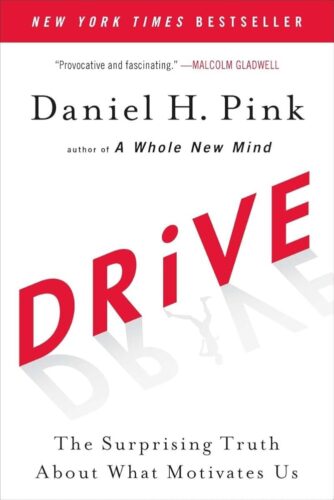
I was already well motivated by my own intrinsic desire to learn and a challenge that I have not bested yet. This also meant that I already had my motivation, and it is not the standard motivator of money or bonus. Money never got me jazzed, but I needed money to not have to worry about basics. I didn’t fully understand this concept until I can across a book we were reading as part of the Executive Leadership Team.
There is a great 10-minute video that breaks this down, but here is my take on it.
In a professional setting where you need even a minimal amount of creative thinking, versus just the same task over and over again, the carrot and the stick do not motivate. In fact, offering a reward for certain outcomes leads to less motivation and stifling creativity.
Instead, as a leader, motivate with Purpose, Autonomy, and Mastery.
Purpose
I think this is the most important part. Without purpose, we will just glide around the world of possibilities and then create our own purpose to bring meaning to work we are interested in doing. A solid purpose gives meaning to autonomy and mastery, as well as points people in the right direction.
An organization might have a purpose statement, such as this one from Ben & Jerry’s: “To make the best possible ice cream in the nicest way possible.” A team or department might have their own purpose statement, such as this made up one for an IT department: “Ensure billability through increasing work mobility and maximum system up time.” Then we can get down to the personal purpose of why people got into a particular field. My job as a leader is to bring those all together with focus so people know where they are going.
Autonomy
The ability to act independently safely only comes after a strong purpose has been established. Decisions will need to be made and we can ensure they are made with the correct “Why” in mind, as long as there is purpose. You can then let people make decisions and even fail, which can be a great learning moment as long as the failure is not catastrophic.
This will also free up the leader to trust the work being done unsupervised and get far away from the dreaded micromanagement. No one likes that.
Mastery
An expert is someone that knows all the ways something doesn’t work. It comes from education, testing, trial and error, and lots and lots of failure. The trick here is balancing continued learning and mastery with deadlines and productivity needs. Encourage people to dive deep into a topic: Even if they find the rabbit hole was not productive for the project, they now know that and can apply that learning for when it is appropriate.
This comes with some professional pride, which is a motivator unto itself. We all can find work that we love to do and we can get very nerdy about it. Mastering a topic comes with a lot of intrinsic reward, far more reward than a few dollar bills.